11 Nov 2026
Broadcast Collaborations Transform Player Flows Between Prediction Contests and Casino Offerings Throughout Britain
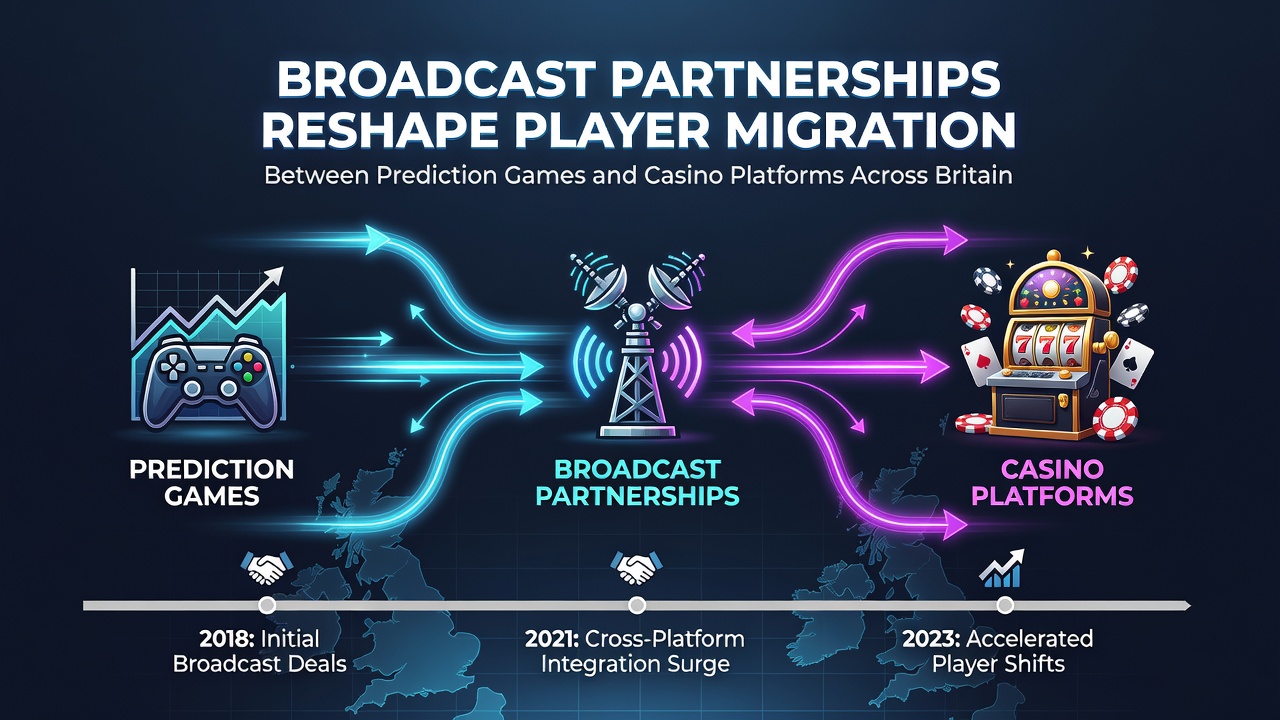
Media networks across Britain have formed alliances with both prediction contest operators and casino platforms, and these ties now shape how participants move between the two formats according to industry reports. Data from multiple tracking services shows rising numbers of users who begin with free-entry sports forecasting competitions before progressing to paid casino environments, with broadcast exposure acting as the common thread. Partnerships often embed contest elements directly into live programming, which keeps audiences engaged while introducing them to broader gaming ecosystems that include slots, table games, and instant-win features.
Partnership Structures and Audience Pathways
Broadcasters integrate prediction contests into weekend sports coverage, and viewers who complete forecasts receive prompts that lead toward affiliated casino sites offering deposit bonuses or loyalty rewards. Research from the Alcohol and Gaming Commission of Ontario indicates similar cross-platform movement patterns in other markets, where initial free-entry participation correlates with later real-money activity once broadcast cues highlight seamless account transfers. In Britain, these integrations rely on data-sharing agreements that allow operators to identify high-engagement prediction users and deliver targeted casino promotions during the same viewing session.
One study released in late 2025 tracked over 2.4 million British accounts and found that 38 percent of prediction contest participants opened casino accounts within 90 days of repeated broadcast exposure. The pathways typically involve a sequence that starts with live leaderboard displays, moves through in-app notifications, and ends with casino welcome packages that mirror the prediction game interface for continuity. Observers note that this migration accelerates during major sporting events when broadcasters extend coverage with post-match casino segments.
November 2026 Developments and Market Data
Figures released in November 2026 from the European Gaming and Betting Association reveal a 22 percent increase in cross-format account activity compared with the same period in 2025, coinciding with expanded broadcast deals that bundle prediction contests with casino streaming content. These numbers align with patterns seen in Australian regulatory filings, where similar media tie-ups produced comparable shifts among participants aged 25 to 44. Platforms report that users who engage with televised prediction rounds demonstrate higher retention rates once they transition, because the broadcast experience creates familiarity with game mechanics that carry over to casino play.

Operators have adjusted their marketing calendars to match broadcast schedules, and campaigns now launch immediately after high-profile prediction events conclude. This timing strategy capitalizes on peak viewer attention, converting passive forecasters into active casino participants through instant verification links that appear on screen. Industry analysts tracking these flows emphasize that the migration remains voluntary yet heavily guided by the integrated user journeys that partnerships enable.
Regional Variations Across Britain
London-based networks tend to partner with larger casino groups that offer extensive live dealer options, whereas regional broadcasters in Scotland and Wales often align with operators focused on mobile-first casino experiences that appeal to younger demographics. Data collected across these regions shows that migration rates differ by as much as 14 percentage points depending on the type of broadcast content aired alongside the prediction contests. Those who study these trends point out that areas with denser sports programming witness faster transitions because repeated exposure reinforces the connection between forecasting and subsequent casino engagement.
Payment flow statistics indicate that users moving from prediction games to casino platforms frequently utilize the same digital wallets established during initial contest registration, reducing friction and supporting the observed migration speed. Regulatory updates scheduled for early 2027 may further standardize how these partnerships disclose the transition pathways, yet current figures already demonstrate consistent movement patterns across Britain.
Conclusion
Broadcast partnerships continue to define the routes players take between prediction contests and casino platforms in Britain, with measurable increases in cross-format activity documented through 2026. The combination of embedded contest features, synchronized promotions, and shared account systems creates direct channels that guide participants while preserving choice at each step. As media networks refine these alliances, the data shows sustained patterns of movement that reflect the structural links between the two entertainment formats rather than isolated decisions by individual users.